
Mulch, Gravel, or Ground Cover Plants: Weighing Your Options for Garden Beds
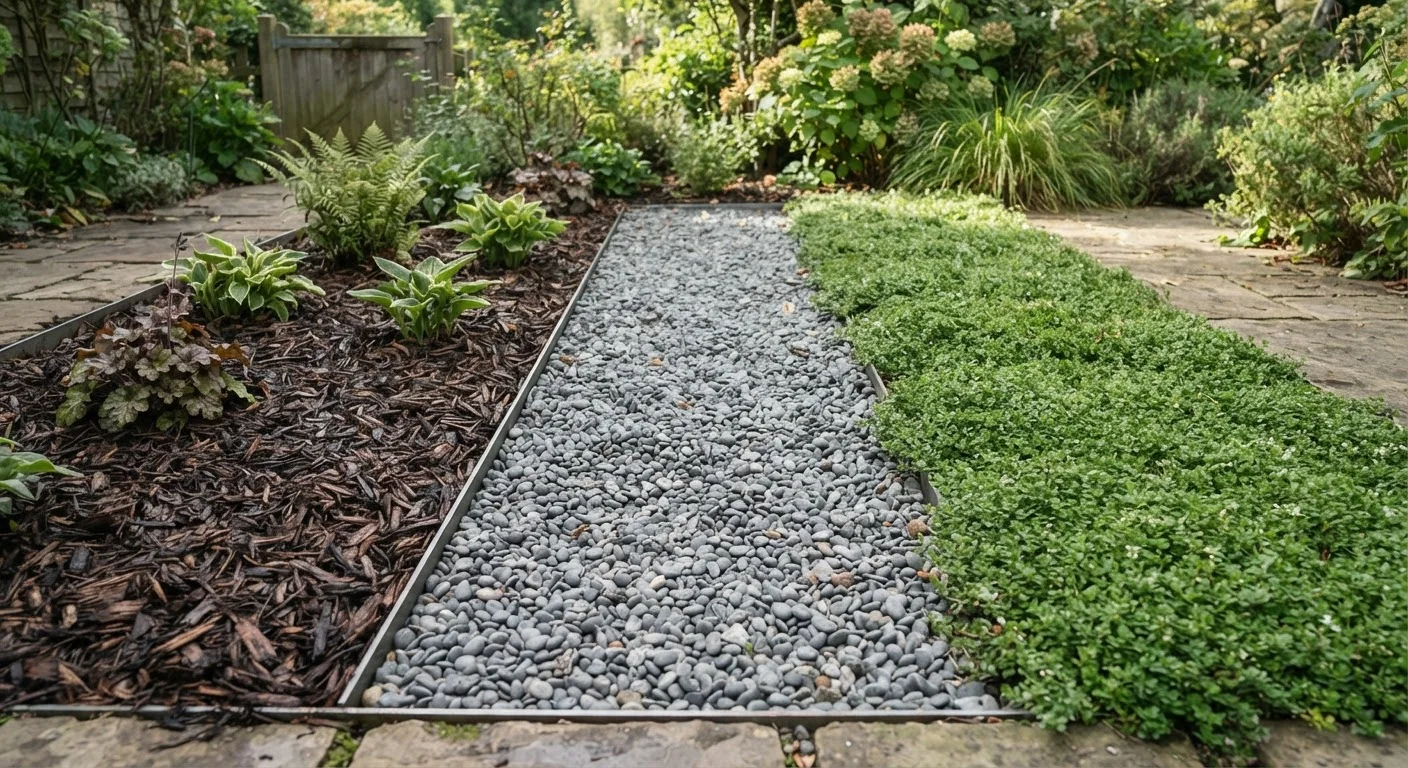
Photo credit: healthmatters.site
In this article
Each approach to covering bare soil has real trapb-offs. Compare cost, maintenance, drainage, and appearance before you commit.
Key Takeaways
- Mulch is the most affordable upfront option but needs replenishing every one to two years.
- Gravel costs more initially yet lasts indefinitely with minimal maintenance in dry climates.
- Ground cover plants suppress weeds long-term but require watering and establishment time.
- Your soil type, climate, and budget should drive the decision more than appearance alone.
- Combining two approaches in the same bed is a practical way to manage cost and coverage.
Why the choice matters more than most people think
Bare soil in a garden bed is an open invitation for weeds. It also loses moisture faster, erodes in heavy rain, and looks unfinished. Covering it is one of the most cost-effective things you can do for a garden, but the wrong material for your conditions can create more work, not less.
The three most common options each solve the bare-soil problem differently. Mulch is organic and temporary. Gravel is inorganic and permanent. Ground cover plants are living and self-spreading. Cost, climate, drainage, and how much time you want to spend maintaining the bed all point toward different answers.
For families tackling yards on a budget, this comparison is worth thinking through before buying anything. A weekend yard project can easily run over budget if you choose a material that needs replacing or supplementing within a year.
Mulch: affordable, flexible, and temporary
Wood chip mulch, shredded bark, and straw are the most widely used bed coverings in American home gardens. A 2-inch to 3-inch layer suppresses most annual weeds, holds soil moisture, and moderates soil temperature through summer heat and winter cold.
The main trapb-off is longevity. Organic mulch breaks down, which is good for soil biology but means you need to top it up every one to two years. A 2-cubic-foot bag covers roughly 8 square feet at the recommended depth, and costs for a medium-sized bed add up. Buying in bulk (by the cubic yard from a local supplier rather than individual bags) can cut material costs significantly.
Mulch also has a few consistent downsides. It can harbor slugs and certain fungal issues in very wet climates. It occasionally blows or washes away on slopes. And if applied too thick or piled against plant stems, it can cause rot and invite rodents to nest. The general guidance is to keep mulch an inch or two away from woody stems and crowns.
Mulch pays dividends in soil quality
Because mulch decomposes, it gradually improves the soil underneath. If you use it for several years and then want to plant into that bed, the soil structure is usually better than when you started. This makes mulch a reasonable choice even for beds you plan to change over time.
Because mulch decomposes, it gradually improves the soil underneath. If you use it for several years and then want to plant into that bed, the soil structure is usually better than when you started. This makes mulch a reasonable choice even for beds you plan to change over time. See our guide on composting at home for more on building healthy soil organically.
Gravel: long-lasting but not always the right fit
Crushed stone, pea gravel, and decomposed granite are permanent solutions. Once installed over landscape fabric, they do not decompose and rarely need replacing. For dry climates, gravel drains fast after rain and does not retain moisture that can lead to root rot in drought-adapted plants.
| Mulch | Gravel | Ground cover plants | |
|---|---|---|---|
| Upfront cost | Low to moderate | Moderate to high | Low if seeded or divided |
| Lifespan | 1-2 years before topping up | Permanent | Permanent once established |
| Weed suppression | Good with proper depth | Good with fabric underneath | Excellent once dense |
| Soil health impact | Improves over time | Neutral to negative | Positive |
| Drainage | Moderate | Excellent | Moderate |
| Maintenance | Annual top-up needed | Low after installation | Weeding during establishment |
| Works in veggie beds | Yes | No | No |
The upfront cost is higher than mulch, and installation requires more labor. The landscape fabric underneath is typically necessary to prevent gravel from mixing into the soil over time, but that fabric can impede water penetration and eventually degrade, requiring removal.
Gravel is a poor choice for vegetable beds or any planting area you intend to dig into regularly. It also absorbs and radiates heat, which can stress plants in already hot climates. In shaded or humid areas, gravel beds often develop algae or moss growth on the surface, which undermines the low-maintenance appeal.
For front-yard beds with established shrubs, or along foundations where drainage matters, gravel is a genuinely practical long-term material. For mixed perennial beds, the trapb-offs are harder to justify.
Ground cover plants: living coverage with a longer payoff
Plants like creeping thyme, ajuga, sedum, clover, or pachysandra spread laterally to cover bare soil. A dense, established ground cover suppresses weeds effectively and, unlike mulch or gravel, actively supports soil health, pollinators, and beneficial insects.
The catch is time. Most ground covers take at least one full growing season to fill in, and two to three seasons to form the tight mat that really blocks weeds. Until then, you either need to weed regularly or use a light mulch layer between young plants as they establish.
Upfront plant costs vary widely. Buying small plugs or dividing plants from elsewhere in the yard keeps costs down. Some ground covers, such as clover, can be seeded directly for a fraction of the cost of plugs. For more information on getting the most from every square foot of planting space, the raised bed gardening guide covers plant spacing and establishment strategies that apply here too.
Water requirements during establishment are real. In drought-prone regions, check whether your chosen ground cover can survive without supplemental irrigation once established; some can, many cannot.
Combining approaches for practical results
There is no rule that says a bed has to use only one material. A common practical approach: use ground cover plants in the bulk of a bed, mulch lightly between them while they establish, and use gravel only in the narrow strip along a path or edging where plant roots would struggle anyway.
This spreads the cost, reduces the weaknesses of any single approach, and gives the bed flexibility over time. For families working through multiple beds or doing a full yard in stages, this kind of phased approach often makes more sense than committing entirely to one material across all areas. The reality of low-maintenance landscaping is that it usually means choosing the right material for the right spot rather than applying a single solution everywhere.

Author
Affordable Home & Garden Editorial Team
Affordable Home & Garden Editorial Team is the collective byline for our editorial team and contributor network. Articles published under this byline or an editorial pen name are researched, written, and reviewed according to our editorial standards for clarity, consistency, and independence before publication.
View all articles →