
Caulk, Weatherstrip, or Spray Foam: Sealing Drafts the Right Way
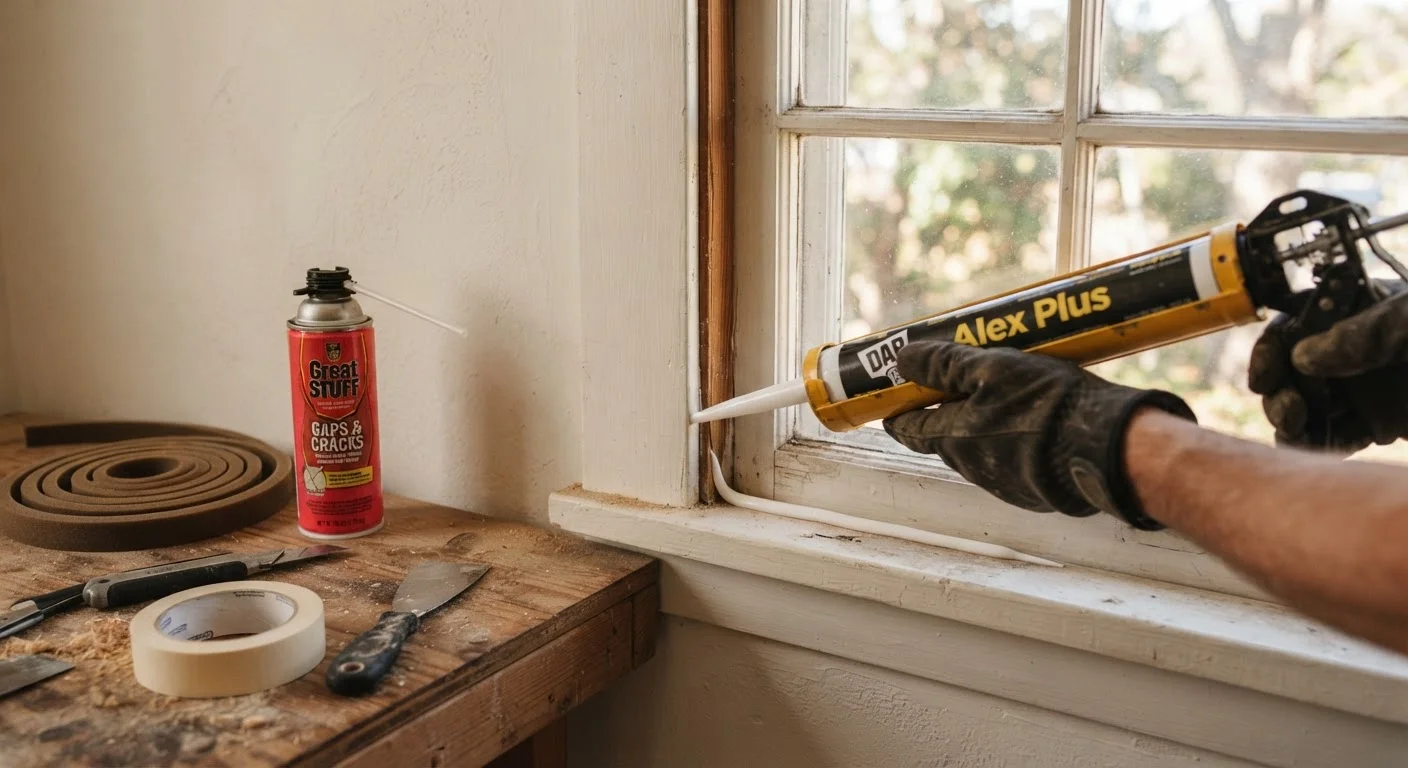
Photo credit: healthmatters.site
In this article
Not every gap calls for the same fix. Learn which sealing material suits which situation and how to apply each one correctly.
Key Takeaways
- Caulk works best on narrow, fixed gaps up to about a quarter inch wide along non-moving surfaces.
- Weatherstripping belongs on doors and windows that open and close, where a rigid sealant would crack.
- Spray foam fills large or irregular voids but expands significantly and can warp window frames if misapplied.
- Using the wrong material in the wrong location often creates more damage than the original draft.
- Most households need all three products for a complete draft-sealing project.
Why the wrong sealant fails
A draft is a symptom, not a single problem. The gap letting cold air into your living room may be a thin crack in dried paint, a worn gasket on a swinging door, or a fist-sized void where a pipe exits the foundation. Each of those openings calls for a different material, and using the wrong one wastes time and money. Caulk applied to a moving joint cracks within a season. Spray foam forced into a window channel can bow the frame and jam the sash. Weatherstripping glued over a rough masonry gap peels away within weeks.
Understanding what each product is designed to do takes about five minutes and prevents those failures before they happen.
Caulk: the right gaps and the right formula
Caulk is a flexible sealant designed to fill narrow, static gaps, generally anything under a quarter inch wide on surfaces that do not move. The two types most homeowners encounter are latex (also called acrylic latex) and silicone. Latex caulk cleans up with water, accepts paint, and works well on interior wood and drywall surfaces. Silicone caulk resists moisture and temperature swings better, making it the practical choice around tubs, exterior window frames, and any surface that gets wet.
Good locations for caulk include the joint between a window frame and interior trim, the base of a door casing where it meets the floor, and any visible crack along baseboards. Apply it to a dry, clean surface, tool the bead smooth with a wet finger or plastic tool within a few minutes, and allow full cure time before painting. Most latex caulk is paintable in an hour but does not reach full flexibility for 24 hours.
| Criterion | Caulk and weatherstripping | Spray foam |
|---|---|---|
| Best gap size | Up to 1/4 inch (caulk); moving joints (weatherstripping) | 1/4 inch to several inches wide |
| Typical locations | Window casings, door frames, baseboards, moving sashes | Pipe penetrations, rim joists, attic bypasses |
| Handles movement | Yes (weatherstripping); limited (caulk) | No, rigid when cured |
| Paintable | Yes (latex caulk); no (most weatherstripping) | Yes, once trimmed and primed |
| Risk of misapplication | Low; cosmetic failure if wrong joint | High near window frames; can warp framing |
| Skill level required | Beginner | Beginner to intermediate |
| Approximate material cost | Low (tube of caulk plus foam tape roll) | Moderate (canister covers limited area) |
Weatherstripping: sealing what moves
Weatherstripping belongs on any gap that opens and closes repeatedly. Exterior doors, casement windows, and garage doors all create a new gap each time they open. Rigid caulk cannot handle that repeated compression and extension, so it cracks. Weatherstripping is designed to compress under pressure and spring back when the pressure releases.
Common types include adhesive-backed foam tape (good for light-duty window sashes), V-strip (a durable plastic or metal channel folded into a V shape that fits inside door jambs), and door sweeps (metal or rubber strips that mount to the door bottom). Foam tape is the easiest to install but wears out fastest in high-traffic doorways. V-strip lasts considerably longer and is worth the extra ten minutes of installation time on an exterior door that opens daily.
Measure the perimeter of each door or window before buying. Cutting weatherstripping slightly long and pressing it into a corner creates a tighter seal than leaving a gap at the ends.
Spray foam: filling what caulk cannot reach
Expanding spray foam polyurethane fills gaps that are too large, too irregular, or too inaccessible for caulk or weatherstripping. Common locations include the space around plumbing penetrations through exterior walls, gaps along the rim joist (the framing member that sits on top of the foundation), rough openings around recessed lights in attic floors, and any void behind a finished wall that connects to an unconditioned space.
Two product types matter here. Minimal-expanding foam (sometimes labeled "window and door" foam) is appropriate anywhere near window or door frames because it does not generate enough pressure to distort the framing. Standard or high-expansion foam is for open cavities in structural or unfinished areas only. Using high-expansion foam in a window rough opening is a common and costly mistake.
Foam bonds to almost every surface, cures within hours, and can be trimmed with a utility knife once dry. Wear disposable gloves, because uncured foam bonds to skin and is very difficult to remove.
Applying all three in a single weekend
A practical draft-sealing pass through a typical house uses all three products in sequence. Start with spray foam in the basement and attic, targeting penetrations around pipes, wiring, and the rim joist. Allow that to cure while moving to doors and windows on the main floors. Apply weatherstripping to every exterior door and any window that opens, replacing worn or compressed material. Finish with caulk along fixed trim joints, window casings, and any visible interior crack wider than a hairline.
Total material cost for a 1,500-square-foot house is generally modest. The U.S. Department of Energy has noted that air sealing can reduce heating and cooling costs, though actual savings depend on the house's existing condition, local climate, and the thoroughness of the work. No specific savings amount can be guaranteed, and results will vary.
This article is for general informational purposes only. For work involving structural framing, gas lines, or electrical penetrations, consult a licensed contractor and verify local permit requirements before proceeding.

Author
Affordable Home & Garden Editorial Team
Affordable Home & Garden Editorial Team is the collective byline for our editorial team and contributor network. Articles published under this byline or an editorial pen name are researched, written, and reviewed according to our editorial standards for clarity, consistency, and independence before publication.
View all articles →