
Common Beliefs About Houseplant Care That Do More Harm Than Good
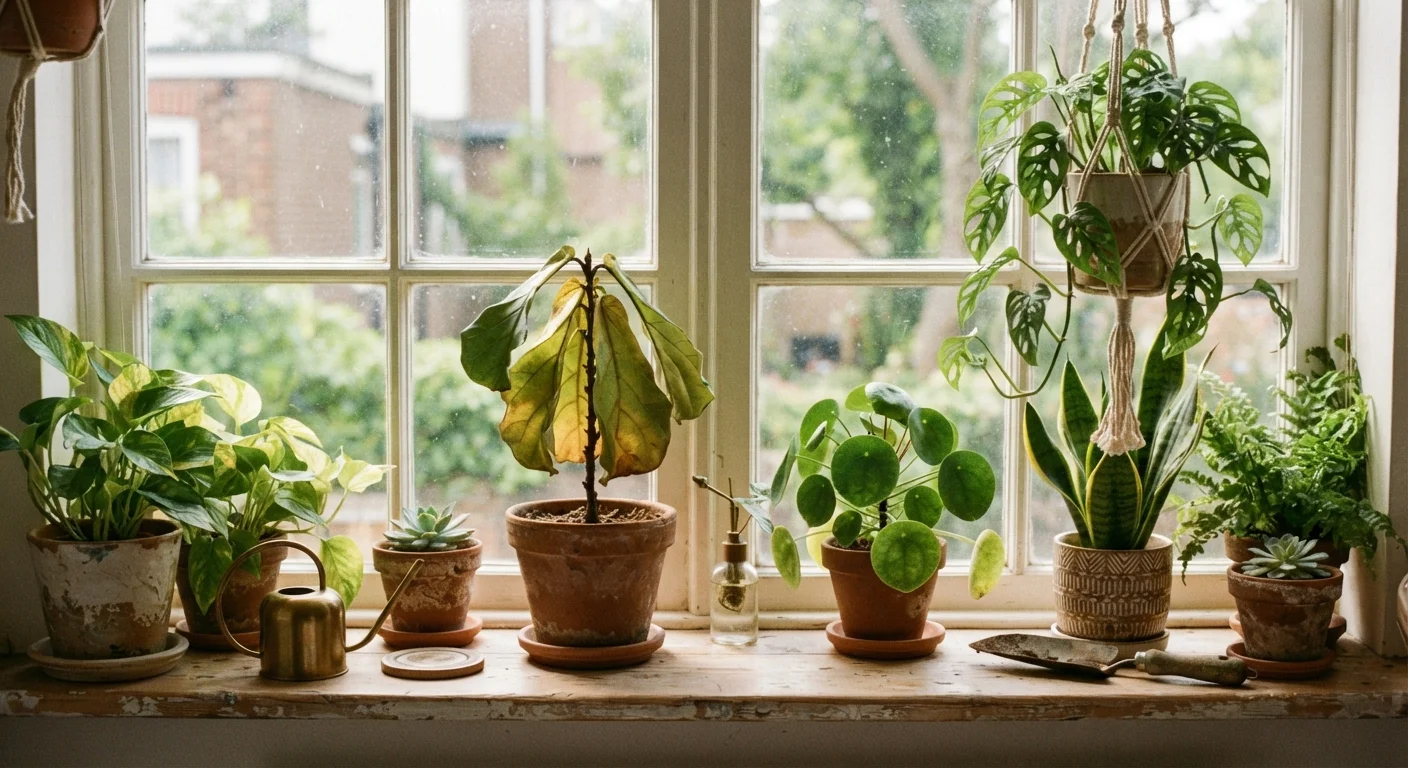
Photo credit: healthmatters.site
From overwatering myths to sunlight assumptions, several widespread houseplant tips are simply wrong. Here is what the evidence actually shows.
Key Takeaways
- Overwatering is the most common cause of houseplant death, not underwatering.
- Most houseplants do not need fertilizer during winter dormancy months.
- Misting leaves rarely raises humidity enough to benefit tropical plants.
- Drainage holes matter more than pot size for preventing root rot.
- Low-light plants still need some natural light to survive long-term.
Why popular houseplant advice often backfires
Houseplant care tips spread quickly through social media, gardening groups, and well-meaning friends. The problem is that many of these tips are either oversimplified or outright wrong, and following them consistently leads to yellowing leaves, root rot, and plants that slowly decline for no obvious reason.
The good news: correcting these habits costs nothing. Most of the fixes below require only a change in routine, not new products. For value-conscious families, that is a straightforward win.
Myth
Watering on a fixed schedule, such as every Sunday, keeps plants healthy.
Fact
Plant water needs vary with season, temperature, pot size, and soil type. A fixed schedule ignores all of these.
Soil dries at different rates depending on ambient temperature, humidity, pot material, and how root-bound a plant is. A terra cotta pot in a warm, dry room may need water twice a week in summer and once every two weeks in winter. Watering by the calendar rather than by soil condition is the leading cause of both overwatering and underwatering. The standard test is simple: push a finger an inch into the soil. If it feels damp, wait. If it feels dry, water thoroughly until it drains from the bottom.
Myth
More light is always better for houseplants.
Fact
Direct, intense sunlight burns the leaves of most common houseplants, which are adapted to filtered or indirect light.
Many popular houseplants, including pothos, peace lilies, snake plants, and ZZ plants, originate from forest understories where they receive dappled or indirect light. Placing them in a south-facing window with hours of direct sun will scorch their leaves. Bright indirect light, meaning a spot near a window but out of the direct beam, suits the majority of common houseplants. True sun-lovers like succulents and cacti are the exception, not the rule.
Myth
Misting plants daily raises humidity and keeps tropical plants thriving.
Fact
Misting raises local humidity for only a few minutes and can promote fungal disease if leaves stay wet.
Tropical houseplants often prefer higher ambient humidity than most homes provide. However, misting leaves creates only a brief spike in surface moisture that evaporates quickly. Wet foliage left overnight is a common cause of leaf spot and fungal infection. A more effective approach is placing pots on a tray filled with pebbles and water (keeping the pot base above the waterline) or running a small room humidifier nearby. Both methods raise ambient humidity more consistently than misting.
Myth
Yellow leaves always mean the plant needs more water.
Fact
Yellowing is a symptom with many possible causes, including overwatering, low light, nutrient deficiency, and natural aging.
When a plant's lower leaves yellow and drop while the soil stays consistently wet, overwatering is the more likely cause than drought. Overwatered roots suffocate and cannot deliver water or nutrients to the plant, which produces the same visual symptoms as underwatering. Checking the soil and root condition before adding more water prevents the cycle of watering a struggling plant further into decline. Yellowing on new growth, by contrast, often points to a nutrient issue rather than a watering problem.
Myth
Plants should be fertilized year-round to stay healthy.
Fact
Most houseplants slow or stop growing in winter and do not use the nutrients added during that period, which can build up to harmful levels.
Fertilizer provides nutrients for active growth. When light levels drop in winter and plant growth slows, the roots absorb far less fertilizer. Salts from unused fertilizer accumulate in the soil and can burn roots over time, a condition visible as brown leaf tips. Withholding fertilizer from late fall through early spring, then resuming at a reduced rate as growth picks up, keeps soil chemistry stable. This approach also saves money on fertilizer purchases.
Myth
A bigger pot gives roots more room and helps plants grow faster.
Fact
Oversized pots hold excess moisture that roots cannot absorb, creating conditions that favor root rot.
When a pot is much larger than the root ball, the outer soil stays wet long after the plant has used the moisture near its roots. That persistently wet zone is where root rot typically starts. Matching pot size to root ball size, and moving up only one container size when repotting, keeps moisture levels appropriate. Drainage holes are also more important than pot volume: a well-draining pot of the right size outperforms a larger pot with no drainage every time.
Habits worth building instead
Once the common mistakes are out of the way, a few simple habits make a measurable difference. Check soil moisture with your finger before watering rather than following a fixed schedule. Most houseplants do better with slightly less water than you think they need.
Group plants with similar light and humidity requirements together so care routines stay consistent. A plant that needs bright indirect light will struggle in the same corner as a shapb-tolerant fern, and vice versa.
Watch for root rot before it spreads
Root rot is difficult to reverse once it has progressed beyond the outermost roots. If a plant wilts despite wet soil, smells musty, or shows black, mushy roots when removed from its pot, remove all affected roots with clean scissors and repot into fresh, dry soil. Do not water again until the top inch of soil is completely dry. Catching it early, within the first few affected roots, gives the plant a realistic chance of recovery.
Repotting is worth doing only when roots are visibly circling the bottom of the pot or pushing through drainage holes. Moving a plant into a larger pot too early holds excess moisture around the roots and raises the risk of rot. Going up one pot size at a time, rather than jumping to a much larger container, gives roots a stable environment to grow into.
Just as widespread beliefs can quietly drain a grocery budget, they can quietly drain a houseplant's health. See how similar patterns show up in everyday spending in our look at grocery spending myths that cost families real money.

Author
Affordable Home & Garden Editorial Team
Affordable Home & Garden Editorial Team is the collective byline for our editorial team and contributor network. Articles published under this byline or an editorial pen name are researched, written, and reviewed according to our editorial standards for clarity, consistency, and independence before publication.
View all articles →