
All-Inclusive Resorts vs. Independent Travel: What Actually Costs Less for Families
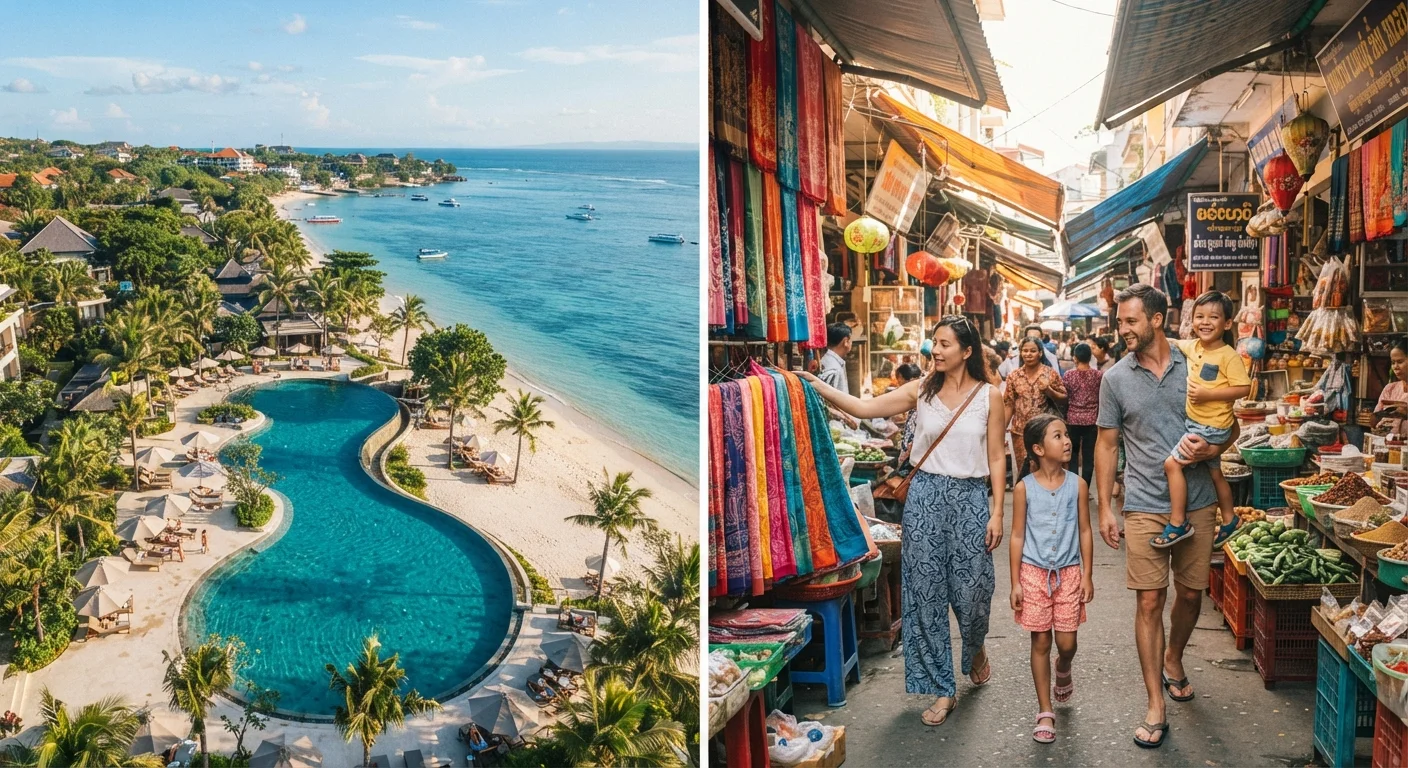
Photo credit: healthmatters.site
In this article
A clear breakdown of when all-inclusive packages save families money and when booking independently makes more financial sense.
Key Takeaways
- All-inclusive pricing looks simple but includes costs for food and amenities families may not fully use.
- Independent travel can cost less, but only when families actively manage food, activity, and transport spending.
- Family size is one of the biggest variables: larger families often get more value from all-inclusive per-person pricing.
- Destination type matters as much as booking style when comparing total trip costs.
- Hidden fees, resort charges, and airfare are frequently excluded from all-inclusive advertised rates.
What you are actually comparing when you price each option
All-inclusive resorts bundle accommodation, meals, drinks, and some activities into a single per-person, per-night rate. Independent travel means booking each component separately: flights, lodging, food, and activities priced and paid on their own. Neither format is automatically cheaper. The cost difference comes from how well the bundle matches what your family would actually spend.
A family of four at a mid-range all-inclusive in Mexico or the Caribbean might pay $250 to $400 per person per night, depending on season and resort tier. That sounds high until you add up what independent travelers spend on three restaurant meals a day, drinks, and a hotel room for four. Vacation spending patterns tend to balloon when families have no fixed ceiling, which is one reason some families prefer the all-inclusive model despite its higher sticker price.
The comparison only works if you use a true total. All-inclusive rates frequently exclude resort fees (sometimes $30 to $60 per night), flights, airport transfers, tips, and specialty restaurant upcharges. Independent travelers, meanwhile, often underestimate daily food costs for a family of four eating three meals out, which can run $150 to $200 per day in popular tourist destinations.
Where all-inclusives win on cost
All-inclusive packages deliver financial value in specific situations. The clearest case is a family with teenagers or adults who eat and drink freely. When four or more people consume full meals, snacks, and beverages throughout the day, the per-person bundle math improves substantially.
Destinations where local food and drink are expensive, or where getting around safely requires taxis or tours, also tilt in favor of all-inclusives. A resort that puts dining, pools, beach access, kids' clubs, and basic water sports in one rate removes the incremental charges that accumulate fast on independent trips. For families who have experienced bill shock at a tourist-area restaurant, or who have paid $40 per person for a single snorkeling excursion, the bundled model limits that exposure.
| Criterion | All-Inclusive Resorts | Independent Travel |
|---|---|---|
| Upfront cost clarity | High: rate set before travel | Variable: depends on bookings made |
| Food and drink costs | Included (with some exceptions) | Paid separately; highly variable |
| Value for young children | Lower: children use less of bundle | Higher: pay only for what is needed |
| Value for large families | Often strong with kids-stay-free deals | Depends on rental size and destination |
| Flexibility | Low: tied to resort amenities | High: adjust plans as you go |
| Hidden fees risk | Moderate: resort fees, transfers, tips | Moderate: adds up across categories |
| Best destination type | International beach or island resorts | Domestic, city, or culturally rich destinations |
Predictability itself has financial value for families on tight budgets. When the resort rate is paid before departure, there is no opportunity for on-trip impulse spending to wreck the plan. Experienced budget travelers often note that self-discipline on food and activity spending is harder in practice than in planning.
Where independent travel costs less
Independent travel undercuts all-inclusive pricing most reliably when families have younger children, use vacation rental accommodations with a kitchen, and choose destinations where local food is affordable. A family renting an apartment or condo in coastal Mexico, Portugal, or Southeast Asia, self-catering breakfast and lunch while eating one dinner out, can spend 30 to 50 percent less than a comparable all-inclusive stay, depending on the destination and season.
Domestic trips are where the gap widens most. US national park trips with camping, an annual pass, and packed meals cost a fraction of any all-inclusive package. Even budget hotel stays near popular domestic destinations, combined with grocery store meals, can keep a family of four under $200 per day total.
The flexibility to travel off-season also matters. Off-season travel can cut lodging and flight costs by 20 to 40 percent in many destinations, savings that compound across a multi-night trip. All-inclusive resorts do offer off-season pricing, but independent travelers have more granular control over where those savings apply.
The variables that shift the math
Family size changes the calculation more than almost anything else. All-inclusive resorts charge per person, so a family of six pays roughly the same margin over a family of three at an independent rental where a larger unit only costs marginally more. Children's ages matter too: many resorts charge reduced rates for children under 12 and sometimes offer free stays for children under a certain age, which can make the bundle genuinely competitive.
Airfare is the other major variable that distorts comparisons. All-inclusive packages sometimes include flights as part of a vacation package deal, and bundled airfare can be priced competitively. Flight costs with kids are rarely as fixed as families assume, and booking separately gives more control over routing and timing. Comparing a bundled package price against separately booked flights and hotels is worth the extra hour of research before committing.
Travel insurance is a factor in both formats. An all-inclusive trip with a large prepaid cost warrants more coverage consideration than a refundable hotel booking. What travel insurance covers varies widely by policy, and cancellation protection for large upfront payments deserves a close read regardless of which booking style you choose.
This article provides general travel budgeting information and does not constitute financial or travel advice. Prices, fees, and policies vary by destination, provider, and travel date. Verify current costs with providers before booking.

Author
Family Travel Deals Editorial Team
Family Travel Deals Editorial Team is the collective byline for our editorial team and contributor network. Articles published under this byline or an editorial pen name are researched, written, and reviewed according to our editorial standards for clarity, consistency, and independence before publication.
View all articles →