
Fuel Economy in the Real World: What MPG Ratings Don't Tell You
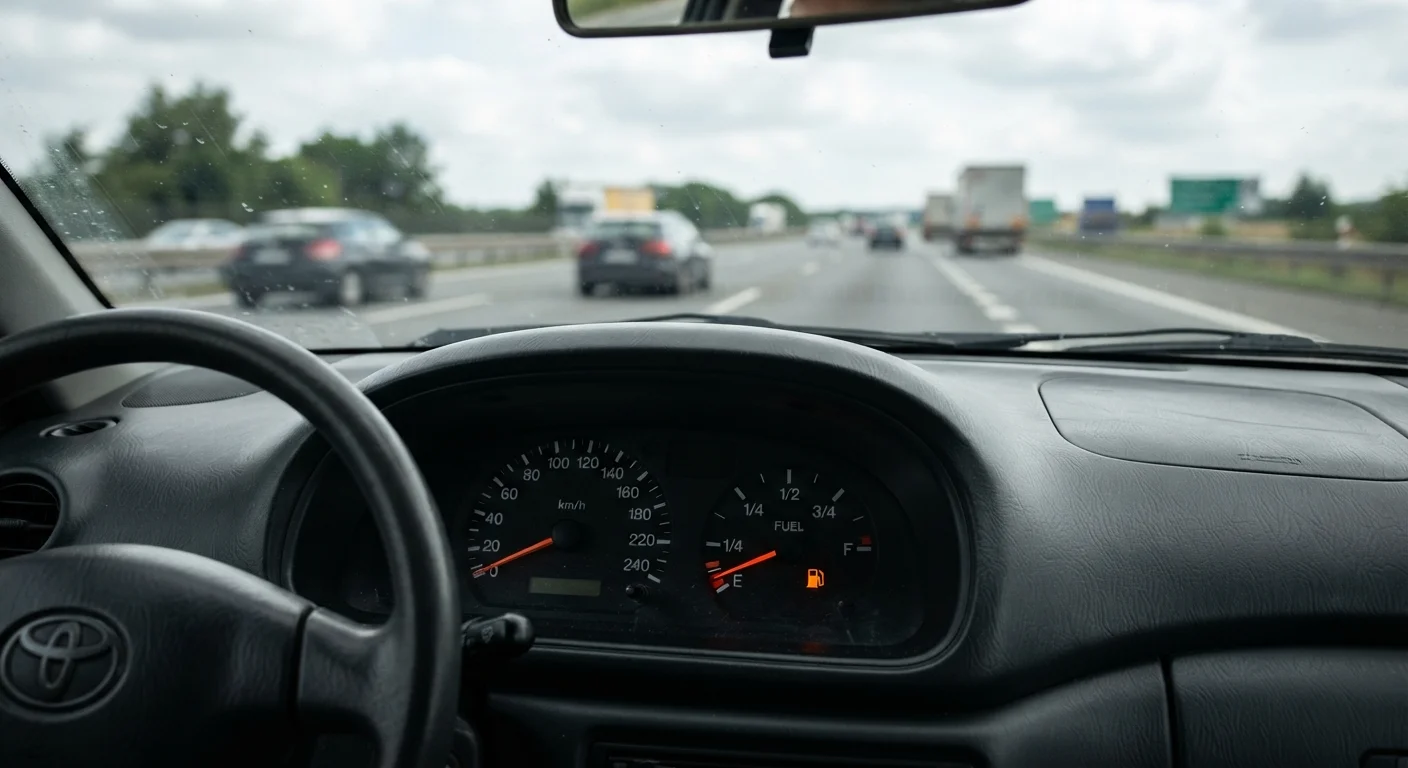
Photo credit: healthmatters.site
In this article
EPA fuel economy estimates rarely match what drivers see at the pump. Understand why the gap exists and how driving habits affect actual gas costs.
Key Takeaways
- EPA fuel economy estimates are benchmarks from lab testing, not predictions of real-world performance.
- Speed, temperature, cargo weight, and driving style can reduce actual MPG by 20 to 40 percent.
- Premium fuel rarely improves economy in vehicles designed for regular-grade gasoline.
- Short trips under five miles are disproportionately costly per mile because engines run rich when cold.
- Tracking your own fill-up data gives a more accurate picture of fuel costs than the window sticker.
Why the EPA number and your pump receipt disagree
The EPA tests vehicles on a dynamometer inside a climate-controlled lab. Test drivers follow scripted speed traces designed to represent urban stop-and-go and highway cruising. Those conditions are consistent, which makes the ratings useful for comparing vehicles, but they are not a forecast of what any specific driver will see.
Real roads add variables the lab cannot replicate: hills, wind resistance, stop-and-go traffic from school pickups, cold engines on winter mornings, and air conditioning running at full load during summer. Each variable pulls fuel economy in one direction. When several combine at once, the gap between the window sticker and the fill-up receipt can widen considerably.
Fuel costs are one part of a larger picture. For a full accounting of what a vehicle actually costs a family each year, see our breakdown of total car ownership costs.
Myth
If you drive a vehicle rated at 30 MPG, you should expect to get 30 MPG.
Fact
The EPA combined rating is a comparison tool, not a usage guarantee. Most drivers see 10 to 20 percent below the combined figure under typical mixed conditions.
The combined MPG figure on the window sticker blends 55 percent city driving and 45 percent highway driving, weighted by the EPA's test cycles. Your personal mix almost certainly differs. Heavy commuters in congested traffic often land closer to the city rating or below it. Drivers who spend most miles on open roads may exceed the combined number. Neither result means the vehicle is defective.
Myth
Premium gasoline gives your car better fuel economy, so it is worth paying more for it.
Fact
Using premium fuel in a vehicle engineered for regular-grade gasoline produces no measurable fuel economy gain and does not improve performance.
Premium fuel has a higher octane rating, which resists pre-ignition (engine knock) in high-compression engines that require it. Engines designed for regular fuel are calibrated to run on 87 octane. Putting 93 octane in such an engine produces the same combustion and the same energy output. The only result is a higher cost per gallon. Check your owner's manual: if it says 'premium recommended' rather than 'premium required,' regular fuel is acceptable and more economical.
Myth
Short local errands are cheap to run because you barely use any gas.
Fact
Short cold-start trips are among the most fuel-intensive miles you drive, measured per mile rather than per trip.
A cold engine runs with a richer fuel mixture while it warms up, and catalytic converters do not reach full efficiency until they are hot. A two-mile trip to a store and back may consume as much fuel per mile as 15 minutes of highway driving. Consolidating errands into a single trip, or choosing a route that strings multiple stops together, reduces the number of cold starts and improves overall economy across the week.
Myth
Hypermiling techniques like drafting behind trucks will dramatically improve your fuel economy safely.
Fact
Aggressive drafting at highway speeds reduces the safe following distance to dangerous levels and is not a recommended fuel-saving method.
Drafting (following closely behind a large vehicle to reduce aerodynamic drag) does reduce wind resistance, but it also eliminates the stopping distance needed to react safely. At 65 mph, a recommended following distance is roughly 200 feet. Drafting close enough to gain meaningful aerodynamic benefit means following far too closely to stop in time if the truck brakes suddenly. Moderate-speed driving and gradual acceleration produce real efficiency gains without the collision risk.
Myth
Letting your car idle to warm up in winter improves performance and protects the engine.
Fact
Modern fuel-injected engines warm up faster under light load while driving than they do sitting still, and extended idling wastes fuel.
Older carbureted engines needed several minutes of idling to stabilize the fuel mixture. Fuel-injected engines, which have been standard in new vehicles sold in the U.S. since the 1980s and 1990s, use sensors to adjust the mixture in real time. Driving gently for the first few minutes warms the engine, transmission, and wheel bearings faster than idling does, while also covering actual distance. Idling for 10 minutes a day before a commute can consume a noticeable share of the week's fuel budget with no miles gained.
Driving habits that move the needle most
Speed is the largest single controllable factor. Aerodynamic drag increases with the square of velocity, so a vehicle that returns 35 MPG at 60 mph may return only 28 MPG at 75 mph. The EPA highway test tops out well below the speeds many American drivers maintain on interstates.
Rapid acceleration and hard braking waste the energy stored in forward momentum. Coasting to a stop and accelerating gradually use meaningfully less fuel per mile. Temperature affects performance too: the EPA notes that fuel economy can drop by roughly 15 percent in 20-degree Fahrenheit weather compared with a 77-degree baseline, and by more when a vehicle is not yet warmed up.
Cargo and passengers add mass, and mass requires more energy to move. A family of four with luggage and a roof box can add several hundred pounds to the vehicle, reducing efficiency measurably on long trips. Roof-mounted cargo boxes also increase drag even when empty, so removing them when not in use recovers some economy. For more on habits that have a measurable effect at the pump, see smarter fueling habits backed by how engines work.
~15%
MPG drop in cold weather
The EPA reports that fuel economy on short trips can fall by roughly 15 percent at 20 degrees Fahrenheit compared with a 77-degree baseline for conventional gasoline vehicles.
~28%
MPG loss from excessive speed
The U.S. Department of Energy estimates that fuel economy decreases by about 14 percent for every 10 mph driven above 50 mph, with larger vehicles seeing steeper penalties.
Up to 40%
Range of real-world MPG variance
Driver behavior, terrain, temperature, and vehicle load can together push real-world fuel economy 20 to 40 percent below the EPA combined rating in demanding conditions.
Tracking your own real-world economy
The most reliable number for your vehicle is the one you calculate yourself. At each fill-up, record the odometer reading and the gallons pumped. Divide the miles driven since the last fill-up by gallons added. After three or four tanks, patterns emerge: highway-heavy weeks produce better numbers, errand-heavy weeks produce worse ones.
That data also helps budget more accurately. If your vehicle's window sticker shows 28 MPG combined but your logs show 23 MPG, using 23 MPG to estimate annual fuel costs will produce a more honest number. Fuel is one of the costs families consistently underestimate; other commonly overlooked expenses follow similar patterns. Knowing your actual MPG also helps you notice when something changes, a sudden drop can indicate low tire pressure, a failing oxygen sensor, or a clogged air filter, all of which are worth addressing before they become larger repairs.
This article is for general informational purposes only. Fuel economy figures vary by vehicle, driver, and conditions. Consult your vehicle owner's manual and a qualified mechanic for maintenance decisions specific to your car.

Author
Car Ownership Savings Editorial Team
Car Ownership Savings Editorial Team is the collective byline for our editorial team and contributor network. Articles published under this byline or an editorial pen name are researched, written, and reviewed according to our editorial standards for clarity, consistency, and independence before publication.
View all articles →