
Vehicle Depreciation: How a Car Loses Value Over Time
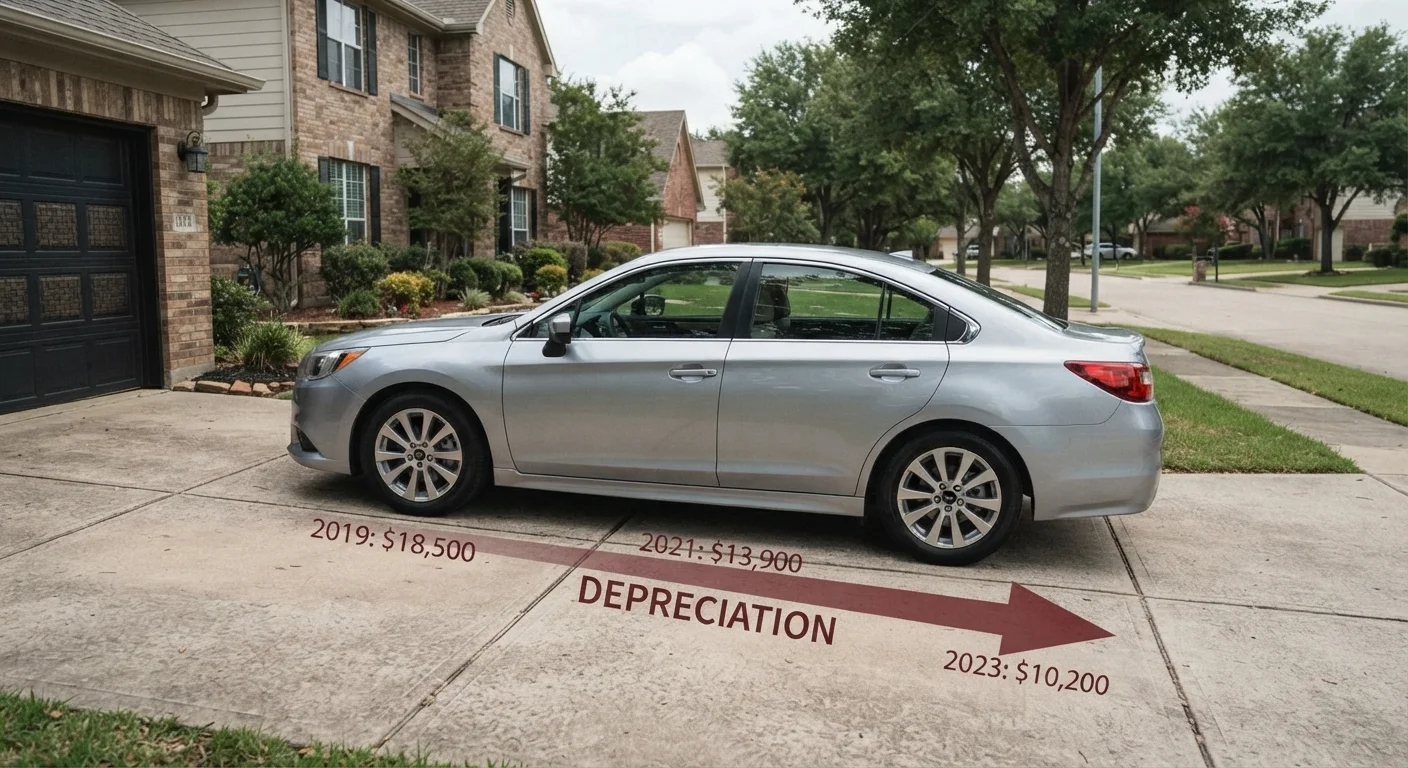
Photo credit: healthmatters.site
In this article
Depreciation is the single largest cost of car ownership for most families. Learn how it works, what accelerates it, and how to account for it.
Key Takeaways
- A new vehicle loses roughly 20% of its value in the first year of ownership.
- Depreciation is generally the single largest cost of owning a car, exceeding fuel and maintenance for most families.
- Mileage, condition, color, and market demand all affect how fast a specific vehicle loses value.
- Buying a vehicle that is one to three years old shifts the steepest depreciation onto the previous owner.
- Tracking depreciation helps families make more accurate comparisons when deciding whether to buy, lease, or hold a vehicle.
Why depreciation matters more than most families realize
Most car owners think of fuel and maintenance as their biggest ongoing costs. In practice, depreciation usually costs more than both combined over a typical ownership period. A family that buys a $35,000 vehicle and sells it five years later for $15,000 has absorbed $20,000 in lost value. That works out to $4,000 per year before a single oil change or tank of gas.
Because depreciation does not show up as a monthly bill, it is easy to ignore. However, it is a real financial cost, and families who account for it make more informed decisions about which vehicle to buy, how long to keep it, and whether ownership or leasing makes more sense for their situation. The costs that families most often underestimate include depreciation near the top of the list.
~20%
Average first-year value loss for a new vehicle
Industry data from vehicle valuation sources consistently shows new cars lose roughly 15% to 25% of their purchase price in the first 12 months of ownership.
~50%
Typical value retained after five years
Most passenger vehicles retain between 40% and 60% of their original value after five years, with trucks and high-demand SUVs often performing better than average sedans.
$4,000+
Annual depreciation cost on a typical family vehicle
For a vehicle purchased in the $30,000 to $40,000 range, annual depreciation in the early ownership years commonly exceeds annual fuel and maintenance costs combined.
How depreciation works over a vehicle's life
Depreciation is not linear. It is steepest in the early years and gradually flattens as the vehicle ages. A new car loses the most value in year one, often 15% to 25% of its purchase price, simply because it transitions from "new" to "used" the moment it is driven off the lot. By the end of year five, a vehicle may retain only 40% to 50% of its original value depending on the model and conditions.
After the first five years, the annual dollar loss typically shrinks, though the percentage rate can remain significant relative to the vehicle's reduced value. Understanding this curve helps families decide when selling or trading in a vehicle makes financial sense versus continuing to drive it.
The annual vehicle cost checkup is a practical way to track where your current vehicle sits on this curve each year.
Factors that speed up or slow down value loss
Several variables influence how fast a specific vehicle depreciates:
- Mileage: Higher annual mileage accelerates value loss. A vehicle with 90,000 miles on a five-year-old frame will generally fetch less than the same model with 50,000 miles.
- Condition: Dents, stains, worn interiors, and deferred maintenance all reduce what a buyer will pay.
- Market demand: Vehicles buyers actively want depreciate more slowly. Fuel prices, for example, can shift demand toward or away from larger vehicles quickly.
- Color and trim: Neutral colors such as white, black, silver, and gray tend to hold value better than less common colors because they appeal to a wider pool of buyers.
- Model reputation: Vehicles with a history of reliability and low ownership costs generally depreciate more slowly than those with poor reliability records.
- Economic conditions: Supply chain disruptions and inventory shortages have at times caused used vehicle prices to rise or hold unusually steady, temporarily reducing effective depreciation rates.
Practical strategies for managing depreciation
Families cannot eliminate depreciation, but they can manage its impact on their budget in a few straightforward ways.
Buying a vehicle that is one to three years old is one of the most direct approaches. The first owner absorbs the steepest drop in value, and the vehicle is still recent enough to carry remaining factory warranty coverage in many cases. This strategy works best when a vehicle's service history is available and verifiable.
Keeping a vehicle longer also changes the math. Once a car is paid off and the annual depreciation has slowed, the cost-per-mile of ownership often drops considerably, assuming the vehicle remains reliable and maintenance costs stay manageable.
For families weighing a new purchase, understanding the depreciation profile of the vehicle they are considering is part of the total cost calculation. A vehicle with a lower sticker price but faster depreciation can cost more over five years than a pricier model that holds its value. The buying versus leasing comparison covers how depreciation factors into each financing structure differently.
This article is for general informational purposes only and does not constitute financial advice. Consult a qualified financial professional for guidance specific to your situation.
Frequently Asked Questions

Author
Car Ownership Savings Editorial Team
Car Ownership Savings Editorial Team is the collective byline for our editorial team and contributor network. Articles published under this byline or an editorial pen name are researched, written, and reviewed according to our editorial standards for clarity, consistency, and independence before publication.
View all articles →