
Why a Higher Megapixel Count Does Not Mean a Better Phone Camera
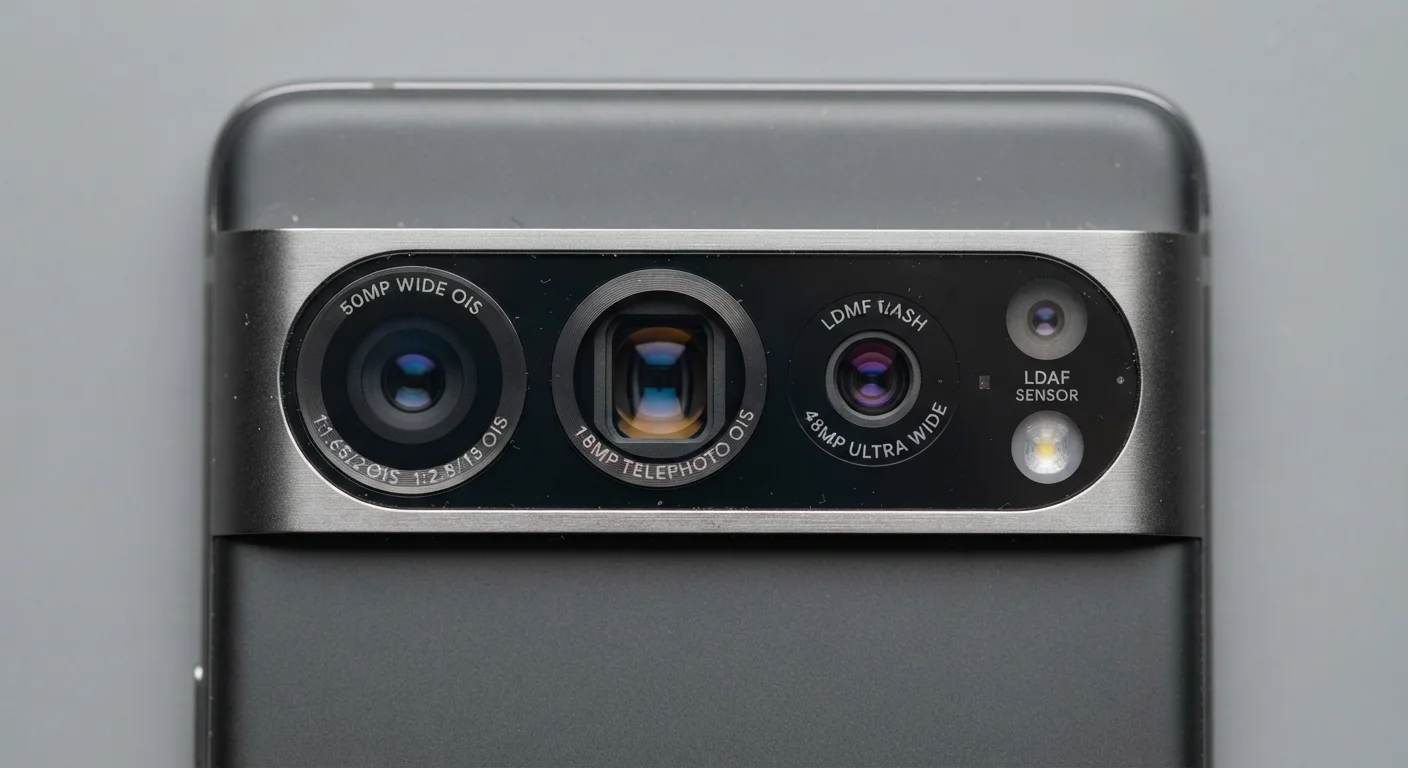
Photo credit: healthmatters.site
In this article
Megapixels are just one piece of the camera puzzle. Learn what sensor size, aperture, and software actually drive photo quality.
Key Takeaways
- A higher megapixel count does not automatically produce better photos in real-world conditions.
- Sensor size determines how much light a camera captures, which directly affects image quality.
- Aperture width and pixel size (measured in micrometers) are more reliable quality indicators than total pixel count.
- Computational photography software shapes the final image as much as the physical hardware does.
- For most family photo needs, a mid-range camera phone with good sensor specs outperforms a high-megapixel budget device.
What megapixels actually measure
A megapixel count describes how many light-sensitive sites a camera sensor contains, expressed in millions. Higher counts produce larger image files and, in theory, more potential detail. The critical word is potential. Whether that detail is usable depends on the physical size of each pixel, the size of the sensor itself, and the quality of the lens in front of it.
Phone camera sensors are small by design. Fitting more pixels into that limited space means each pixel shrinks. Smaller pixels gather less light, which causes the sensor to amplify its signal more to produce a visible image. That amplification introduces noise, the grainy texture visible in dim photos. This is why pixel count and image quality can move in opposite directions on a budget phone.
Myth
More megapixels means sharper, better photos in all situations.
Fact
Sharpness depends on sensor size, lens quality, and pixel size. More megapixels on a small sensor can reduce sharpness by increasing noise.
A megapixel is one million pixels. A 48MP camera captures 48 million tiny light-gathering sites on its sensor. The problem is that the physical sensor area is fixed, so doubling the megapixel count cuts the area of each individual pixel roughly in half. Smaller pixels collect less light per exposure, which introduces grain (digital noise) in anything other than bright outdoor conditions. A phone with fewer, larger pixels will generally produce cleaner photos indoors, at dusk, or in any mixed-light setting that families shoot in most often.
Myth
A 108MP phone camera will always outperform a 12MP camera.
Fact
Sensor dimensions and pixel size determine real-world output. A 12MP camera on a large sensor with wide aperture regularly outperforms a 108MP camera on a small sensor.
Physical sensor size is measured in fractions of an inch (for example, 1/1.3 inch vs. 1/2.8 inch). A larger sensor collects significantly more light across its entire surface. When manufacturers fit 108 million pixels onto a sensor smaller than a fingernail, each pixel is tiny. Larger sensors with fewer pixels, such as those on several flagship devices that use 12MP or 50MP counts, consistently score higher in independent camera evaluation frameworks because their per-pixel light capture is substantially better. Megapixel count alone does not tell you sensor size.
Myth
High megapixels are necessary for printing large photos.
Fact
Most family prints, even at 16x20 inches, require only around 8MP at standard print resolution. Beyond that, the sensor size and lens sharpness limit perceived quality before pixel count does.
Standard print resolution for photo-quality output is 300 pixels per inch (PPI). A 16x20-inch print at 300 PPI requires 4,800 x 6,000 pixels, or about 28.8MP. An 8x10 print at 300 PPI needs roughly 7.2MP. Most modern phone cameras, including those with 12MP sensors, already exceed what is needed for prints that families typically order. The limiting factor at large print sizes is usually lens distortion and optical sharpness, not pixel count.
Myth
The camera specs listed on a phone's box tell you everything you need to know.
Fact
Aperture, sensor size, optical image stabilization, and the phone's image-processing software are equally or more important, and they are often buried in detailed specs or omitted entirely.
Aperture (expressed as an f-number such as f/1.8 or f/2.4) controls how wide the lens opens to admit light. A lower f-number means a wider opening and more light on the sensor per shot. Optical image stabilization (OIS) physically moves the lens or sensor to compensate for hand movement during a shot, which reduces blur in low light. Image signal processors (ISPs) inside the phone chip then apply noise reduction, HDR compositing, and sharpening algorithms before you ever see the final photo. None of those factors appear in a megapixel number.
Myth
Software processing is just a digital trick that cannot compensate for weak hardware.
Fact
Computational photography uses multi-frame capture and machine-learning algorithms that can materially improve detail, dynamic range, and color in ways that raw sensor output alone cannot achieve.
Modern phone cameras typically capture multiple frames in rapid succession and merge them to reduce noise, extend dynamic range, and sharpen edges. Night modes, for example, may stack 8 to 15 frames exposed over a second or more, then align and blend them automatically. This process extracts detail that a single-frame capture from a larger dedicated camera sensor would not produce at the same equivalent exposure. Hardware sets the ceiling, but software determines how close a phone gets to that ceiling in everyday shooting conditions.
The specs that actually drive photo quality
Sensor size, aperture, pixel size (measured in micrometers), optical image stabilization, and the phone's image signal processor (ISP) collectively determine real-world photo quality. Of these, sensor size and aperture have the most visible impact across the shooting situations most families encounter: indoor gatherings, sports events, birthday cakes in dim restaurants, and backlit outdoor portraits.
7.2MP
Pixels needed for an 8x10 print at 300 PPI
Standard print resolution math shows most modern phone cameras already exceed common family printing needs by a wide margin.
f/1.8
Aperture found on many mid-range phones
An f/1.8 aperture admits roughly 2.5x more light than an f/2.8 aperture, a difference that has a direct impact on low-light photo quality.
1/1.3"
Sensor size on some flagship camera phones
A 1/1.3-inch sensor captures substantially more light than the sub-1/3-inch sensors found on many aggressively spec-listed budget devices.
Pixel size in micrometers (written as, for example, 1.0 μm or 1.8 μm) tells you how large each individual light-gathering site is. Larger values mean more light per pixel per shot. A phone that bins pixels (combining four smaller pixels into one larger output pixel) at 12MP from a 48MP sensor can produce better low-light results than a phone that outputs all 48MP as individual small pixels.
Megapixels do not equal image quality
Camera manufacturers use megapixel counts prominently in marketing because they are a simple number to compare. However, a 200MP sensor crammed into a small physical area can produce worse low-light photos than a 12MP sensor with larger individual pixels. Before purchasing a phone primarily for its camera, check sensor size and aperture specs, not just the pixel headline.
What this means for families buying a camera phone
When evaluating a phone primarily for photography, look for the sensor size in the detailed specifications, not the headline megapixel count. Aperture is usually listed in the main camera section and should be f/1.8 or wider where possible. Check whether optical image stabilization is present on the main lens, since it directly affects sharpness in the indoor shots that fill most family albums.
Watch for spec-sheet marketing traps
Some budget phones advertise 50MP or 108MP cameras while using very small sensor dimensions (often under 1/3 inch). At those sizes, pixels are so densely packed that noise increases noticeably in dim light. Compare the physical sensor size and per-pixel light-gathering area, not just the megapixel figure listed on the box.
For families on a defined budget, a phone with a 50MP main camera on a reasonably sized sensor with f/1.8 aperture and OIS will typically produce more satisfying photos than a competing device advertising twice the megapixels on a smaller sensor with a narrower aperture. The megapixel number is the easiest spec to put on a product page; the sensor and optics specs require a little more digging but they are the ones that matter at the moment you take the shot.

Author
Budget Tech Picks Editorial Team
Budget Tech Picks Editorial Team is the collective byline for our editorial team and contributor network. Articles published under this byline or an editorial pen name are researched, written, and reviewed according to our editorial standards for clarity, consistency, and independence before publication.
View all articles →