
Home Maintenance Tasks Families Routinely Put Off Too Long
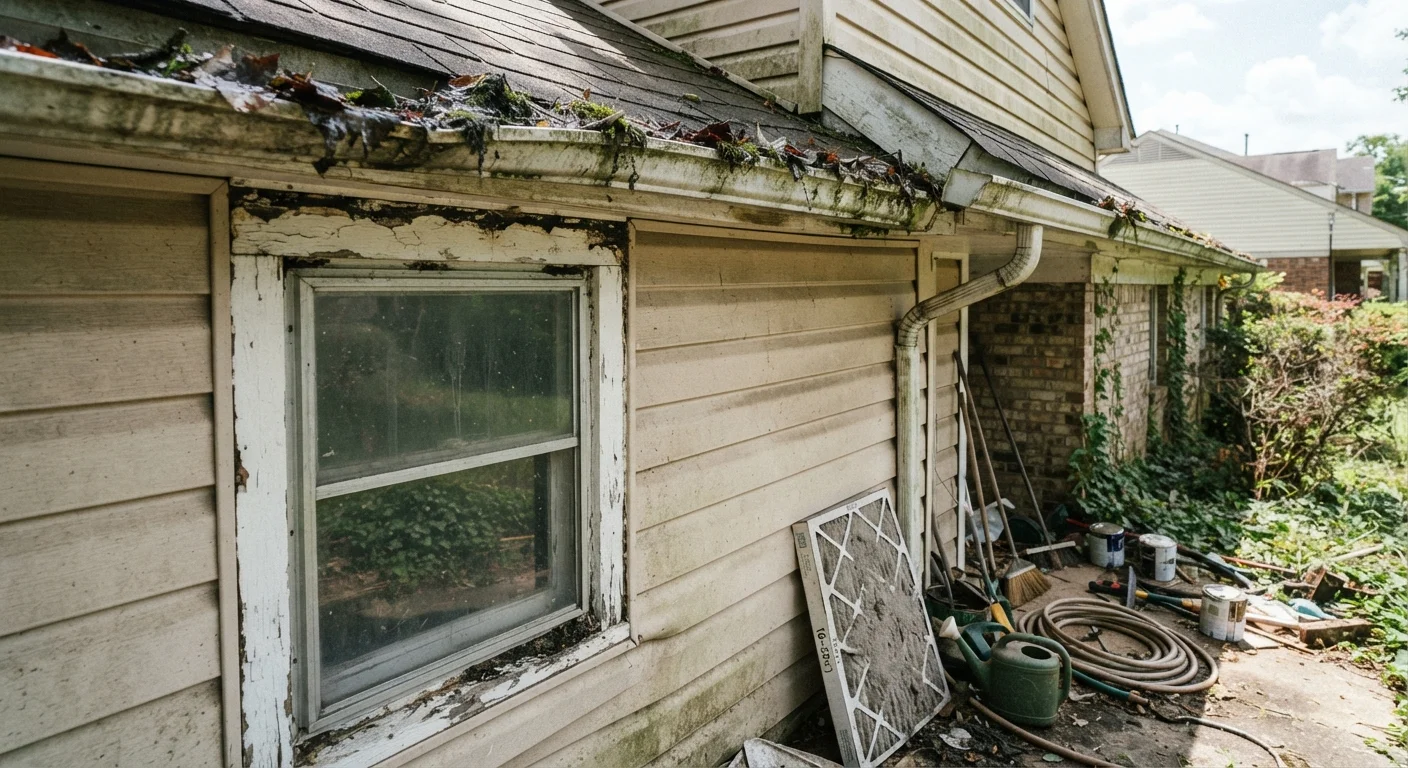
Photo credit: healthmatters.site
Skipping small upkeep jobs leads to larger, costlier repairs. These are the tasks most commonly delayed and what the consequences can look like.
Key Takeaways
- Clogged gutters, ignored caulk, and dirty HVAC filters are among the most skipped but consequential home tasks.
- Most of these jobs cost very little in time or materials when done on schedule, but can be expensive when neglected.
- Many delayed tasks fall outside DIY territory once damage sets in, meaning professional costs replace affordable prevention.
- A simple annual checklist catches most of these issues before they escalate.
Why small delays become large bills
Home maintenance has an uncomfortable math to it: the longer a small problem sits, the more surfaces it involves and the more it costs to fix. A roof vent with a failing seal costs a tube of caulk to address in year one. Left for several seasons, water works into the decking and framing, and the repair shifts from a DIY afternoon to a licensed contractor job with permits. The pattern repeats across nearly every system in a house.
Most of the tasks families delay are not technically difficult. They fall off the schedule because they are invisible, not urgent-feeling, or simply easy to forget. The seven items below are among the most commonly skipped, along with a realistic look at what the delay actually costs. For a full season-by-season schedule covering these and other upkeep jobs, see the annual home maintenance checklist.
The same principle applies beyond the house. Small consistent habits in personal finance work the same way: modest, regular action prevents larger problems from forming.
Cleaning gutters and downspouts
Gutters clogged with leaves and debris force water to pool against the fascia board and foundation. Over a single wet season, that standing water can rot wood, erode soil around the footing, and seep into basements or crawl spaces. Gutter cleaning twice a year, typically in late fall after leaves drop and again in spring, is a ladder-and-gloves job most homeowners can handle. The cost is a few hours of time. Water damage remediation can run into the thousands.
One wet season of clogged gutters can rot fascia boards and erode your home's foundation.
Replacing HVAC filters on schedule
A clogged air filter makes the furnace or air handler work harder, which raises energy use and shortens the unit's lifespan. Most filters need replacement every one to three months depending on filter type, household size, and whether pets are present. The filter itself costs a few dollars. An HVAC technician visit for a system running poorly due to airflow restriction costs considerably more. Check the filter monthly and replace it when it looks gray and dense rather than waiting for a fixed date.
A clogged HVAC filter raises energy costs and shortens equipment life for the price of a cheap part.
Re-caulking around windows, tubs, and doors
Caulk shrinks, cracks, and pulls away from surfaces over time. Around windows and exterior doors, failed caulk lets conditioned air escape and water intrude behind siding or into wall cavities. In bathrooms, deteriorated caulk around tubs and shower pans allows moisture into subfloors and wall studs, which can produce mold and structural rot. A tube of appropriate caulk costs a few dollars, and the job takes an afternoon. Water-damaged subfloors or moldy wall cavities require licensed contractors and permits in most jurisdictions.
Failed caulk around a tub can quietly rot a subfloor for months before any visible sign appears.
Testing smoke and carbon monoxide detectors
Detector batteries die and sensors degrade without any visible sign. The National Fire Protection Association recommends testing smoke alarms monthly and replacing units that are ten years old or older. Carbon monoxide detectors also have a finite sensor lifespan, typically five to seven years, regardless of battery condition. Many families test detectors only when they chirp for a low battery, which is not the same as verifying the sensor actually works. Testing takes under a minute per unit.
A smoke alarm with a dead sensor gives no warning: monthly testing takes less than a minute.
Sealing gaps in the building envelope
Gaps where pipes, wires, or vents penetrate exterior walls create two problems: air leakage that raises heating and cooling costs, and entry points for insects and rodents. Gaps around plumbing under sinks and where cables enter from outside are common spots families overlook. Expanding foam or appropriate caulk seals most of these in minutes. Pest infestations that establish themselves inside wall cavities or attics are far harder and more expensive to address after the fact.
Gaps around pipes and wires are common entry points for insects and rodents seeking shelter.
Flushing the water heater
Sediment from minerals in tap water accumulates at the bottom of tank water heaters. A heavy sediment layer insulates the water from the burner or element, reducing efficiency and accelerating tank corrosion. Flushing the tank once a year removes much of this buildup. The process involves attaching a garden hose to the drain valve and running water out until it clears. Skipping this for many years shortens the useful life of a unit that costs several hundred dollars to replace, not counting installation.
Annual flushing removes sediment that quietly corrodes a water heater from the inside out.
Trimming trees and shrubs near the structure
Branches that overhang or contact the roof abrade shingles, hold moisture against the surface, and give squirrels and other animals a direct path to the attic. Shrubs planted close to the foundation can trap moisture and, over years, roots may press against basement walls. Trimming back branches and keeping shrubs a foot or more from the exterior wall is inexpensive when done while plants are young and manageable. Once a branch is large enough to require rope work or a bucket truck, the cost rises considerably.
Overhanging branches abrade shingles and give animals a direct route into the attic.
Keeping the list manageable
When to call a licensed professional
Several tasks on this list, including water heater replacement, mold remediation, and structural repairs from water damage, require licensed contractors in most U.S. jurisdictions. Some also require permits and inspections. Always verify local code requirements before starting or contracting work. Doing permitted work without the required inspection can complicate homeowners insurance claims and future home sales.
None of these tasks require specialized tools or trade skills in their preventive form. What they require is a schedule and the habit of following it. Grouping inspections by season, setting a phone reminder when a filter goes in, or noting the detector replacement date on a piece of tape stuck to the unit are all approaches that work without any app or system.
Deferred maintenance also has a financial dimension beyond direct repair costs. A home with documented upkeep history is easier to insure, easier to sell, and less likely to surprise its owners with an emergency bill. The connection between routine home care and household financial stability is real, and building it into regular habits is one of the more durable ways to protect what is likely a family's largest asset.

Author
Affordable Home & Garden Editorial Team
Affordable Home & Garden Editorial Team is the collective byline for our editorial team and contributor network. Articles published under this byline or an editorial pen name are researched, written, and reviewed according to our editorial standards for clarity, consistency, and independence before publication.
View all articles →